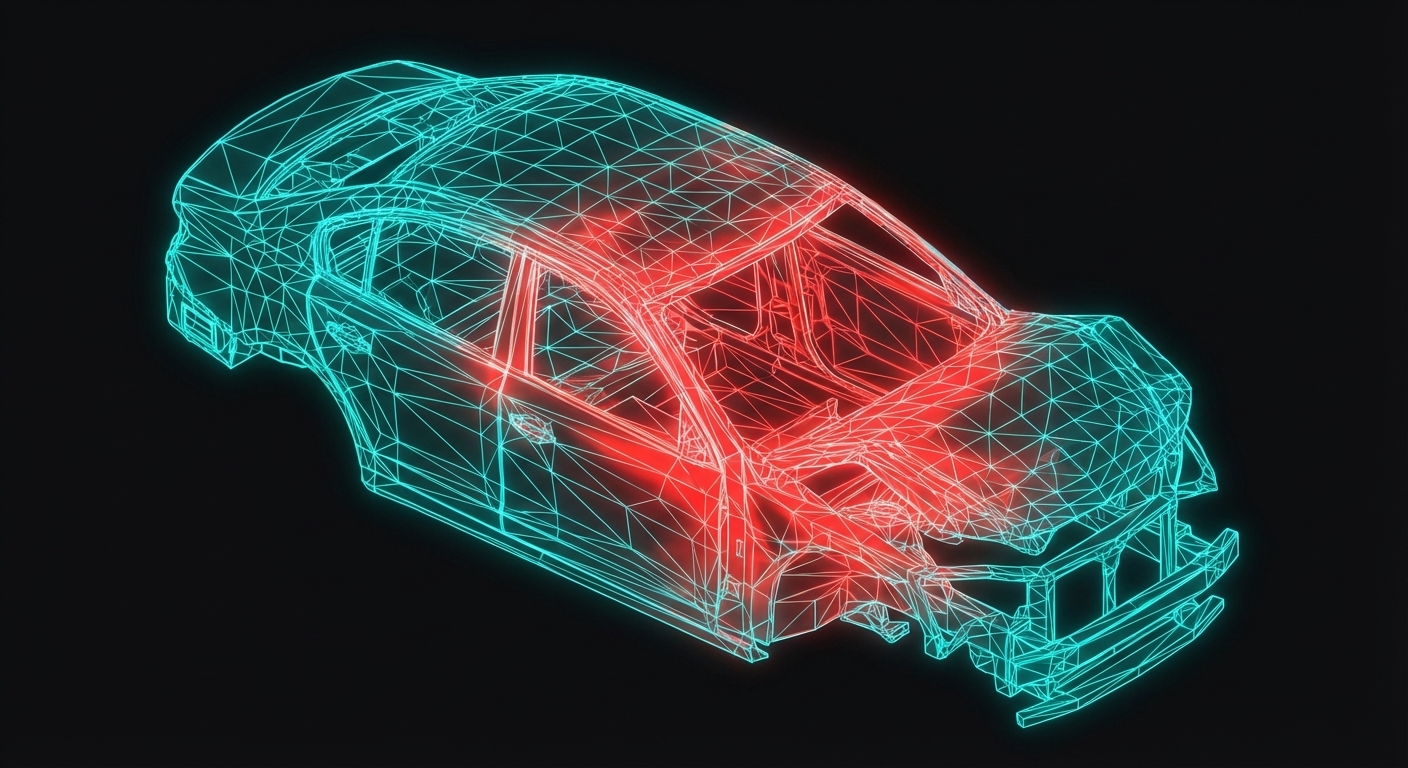
Polymers make up roughly 8–10% of a modern car by weight, but that percentage is growing as engineers replace metal brackets, housings, and structural components with engineered plastics. In aerospace, high-performance polymers serve as matrix materials for composites and as seals and bushings in extreme environments.
Thermoplastics vs. Thermosets
This is the most fundamental distinction in polymer engineering:
Thermoplastics — Long polymer chains held together by weak intermolecular forces (van der Waals, hydrogen bonds). Can be melted and re-formed repeatedly. Recyclable. Processed by injection molding, extrusion, blow molding, thermoforming.
Thermosets — Polymer chains are chemically cross-linked during curing. Once set, they cannot be re-melted — they char and decompose. Stronger and more temperature-resistant than thermoplastics, but not recyclable by melting. Processed by compression molding, RTM, autoclave curing.
Property
Thermoplastic
Thermoset
Recyclable by melting?
Yes
No
Temperature resistance
Lower
Higher
Toughness
Generally higher
Generally more brittle
Processing
Fast (injection molding)
Slower (curing required)
Examples
PP, ABS, PA, PC, PEEK
Epoxy, polyurethane, vinyl ester
Thermoplastic vs. thermoset molecular structure — weak intermolecular bonds vs. covalent cross-links. Hover each panel for details.
Key Automotive Thermoplastics
Polypropylene (PP)
The most-used polymer in cars — ~20% of all automotive plastics by weight. Cheap, light (0.9 g/cm³), chemical resistant, easily recyclable.
Sponsored
Master CATIA, NX, LS-DYNA, HyperMesh, ANSYS
The exact tools used by Mahindra, Bosch & TATA ELXSI
See All Tools
Applications: Bumper fascias, interior door trim, instrument panels, battery cases (including EV battery housings), HVAC ducts, fender liners.
Properties: σu ~30 MPa, E ~1.5 GPa, Tg ~-10°C (brittle at low temperatures unless modified with rubber particles).
ABS (Acrylonitrile Butadiene Styrene)
Good impact resistance, surface finish, and dimensional stability. Takes paint and plating well.
Applications: Interior trim panels, pillar covers, grilles, mirror housings, center console components.
Nylon / Polyamide (PA6, PA66)
The engineering plastic workhorse for under-hood components. High strength, stiffness, and temperature resistance, especially when glass-fiber reinforced (PA66-GF30 or PA66-GF50).
Applications: Intake manifolds, radiator end tanks, engine covers, oil pans, cable ties, gear teeth.
Properties (PA66-GF30): σu ~185 MPa, E ~9 GPa, continuous use temp ~120°C, Tg ~70°C.
POM (Polyoxymethylene / Acetal / Delrin)
Very low friction, excellent dimensional stability, resistance to moisture. The "gear and bearing plastic."
Sponsored
3,000+ engineers placed at Mahindra, Bosch, TATA ELXSI
Including Continental, Capgemini, Ola Electric & 500+ more companies
See Where They Work
Applications: Fuel system components, window regulator gears, door lock mechanisms, clips, fasteners.
Polycarbonate (PC)
Transparent, extremely impact-resistant (250× stronger than glass by weight). UV-stable with coatings.
Applications: Headlamp lenses, sunroofs, instrument cluster covers, EV charging port covers.
PBT (Polybutylene Terephthalate)
Fast crystallization — ideal for high-volume injection molding. Good electrical properties and chemical resistance.
The premium high-performance thermoplastic. Continuous use up to 250°C, excellent chemical resistance, inherently flame-retardant. Very expensive (~70–100 USD/kg).
Sponsored
Harshal got placed at Fiat Chrysler as Design Engineer
Watch his video testimonial on how the program helped him
See His Journey
Applications: Aerospace bushings and seals (replacing bronze), oil & gas downhole components, medical implants, wire insulation.
Properties: σu ~100 MPa, E ~4.5 GPa, Tg ~143°C, Tm ~343°C.
🎯3,000+ Engineers Placed
Sponsored
Harshal
Fiat Chrysler
Abhishek
TATA ELXSI
Srinithin
Xitadel
Ranjith
Core Automotive
Gaurav
Automotive Company
Bino
Design Firm
Aseem
EV Company
Puneet
Automotive Company
Vishal
EV Startup
More Success Stories
Key Thermosets
Epoxy
The dominant matrix resin for aerospace composites (CFRP). High strength, good adhesion, low shrinkage, excellent chemical resistance. Tg typically 120–180°C depending on formulation.
Chopped glass fiber in polyester or vinyl ester resin. Compression molded into rigid panels and structural parts.
Applications: Corvette body panels (since 1953), truck hood and fender panels, headlamp reflectors, electrical enclosures.
Elastomers (Rubbers)
Elastomers are cross-linked polymers that can undergo large reversible deformations (hundreds of percent strain). They're essential for sealing, damping, and flexible connections.
Type
Key Property
Application
NR (Natural Rubber)
High resilience, tear resistance
Tire treads, engine mounts
SBR (Styrene-Butadiene)
Wear resistance, low cost
Tire compounds (70% of all tires)
EPDM
Weather/ozone/UV resistance
Door seals, window seals, weatherstripping, coolant hoses
NBR (Nitrile)
Oil/fuel resistance
Fuel hoses, O-rings, gaskets
Silicone
Wide temperature range (-60 to +230°C)
Gaskets, spark plug boots, high-temp seals
FKM / Viton
Chemical & high-temp resistance
Fuel injector O-rings, transmission seals, chemical process seals
CR (Neoprene)
Moderate oil/weather resistance
V-belts, CV joint boots, adhesives
EPDM is the most-used elastomer in automotive after tire rubbers — it seals every door, window, trunk, and hood.
FKM (Viton) is the go-to seal material anywhere fuel or aggressive fluids are present. It resists gasoline, diesel, biodiesel, and transmission fluid at temperatures up to ~200°C.
Glass Transition Temperature (Tg)
Every polymer has a Tg — the temperature below which it's hard and glassy, above which it's soft and rubbery (for amorphous regions). This is arguably the most important single number for polymer design:
Design rule: For structural applications, the service temperature must be well below Tg. For elastomeric applications, the service temperature must be above Tg.
Polymer
Tg (°C)
PP
~ -10
HDPE
~ -120
PET
~75
PC
~147
PA66
~70
PEEK
~143
Epoxy (typical)
~120–180
Industry Trends
Bio-based polymers: PA11 (from castor oil) used in automotive fuel lines. PLA exploring structural uses. Ford uses soy-based foam in seats.
Recycled content: EU targets 25% recycled plastic in new vehicles. PP and PA are the easiest to recycle mechanically.
Metal replacement: Glass-fiber-reinforced PA66 replacing die-cast aluminum for brackets, pedal assemblies, and structural mounts. Weight savings of 30–50%.
Self-healing polymers: Research-stage materials with microcapsules that release healing agents when cracked. Potential for composite repair.
Key Takeaways
Thermoplastics can be re-melted and recycled; thermosets are permanently cross-linked and stronger at temperature